Not every roof repair is something you can solve with a standard piece of flashing.
During a recent roofing project, the Revival Roofing crew uncovered an unusual problem where a roof valley terminated directly into a wall. Water traveling down the valley had been running into the wall area, eventually causing moisture damage and rotting the wood underneath.
Once the shingles and siding were removed, we were able to see the extent of the problem and build a solution designed specifically for this roof.
Why a Roof Valley Running Into a Wall Can Cause Problems
Roof valleys collect and direct a significant amount of rainwater and melting snow. Ideally, that water has a clear path off the roof.
On this home, the valley ran directly toward a wall. Robert wasn’t certain whether the configuration was part of the original construction or the result of an addition built later, but the layout created a difficult drainage point.
Instead of water moving freely away from the structure, it was reaching the wall area. Over time, that water intrusion caused the underlying wood to rot.
These are the kinds of problems that may remain hidden until shingles, flashing or siding are removed.
Removing the Damaged Roofing and Wood
Correcting the problem meant doing more than replacing the shingles over the affected area.
The crew removed the shingles and portions of the steel siding so they could access the area where the valley met the wall. The deteriorated wood could then be removed and replaced rather than being covered by the new roofing system.
That gave the crew a sound surface to work from and an opportunity to address the path the water would take in the future.
Creating a Custom Bent Metal Solution
The unusual roof configuration required a piece of flashing made specifically for this location.
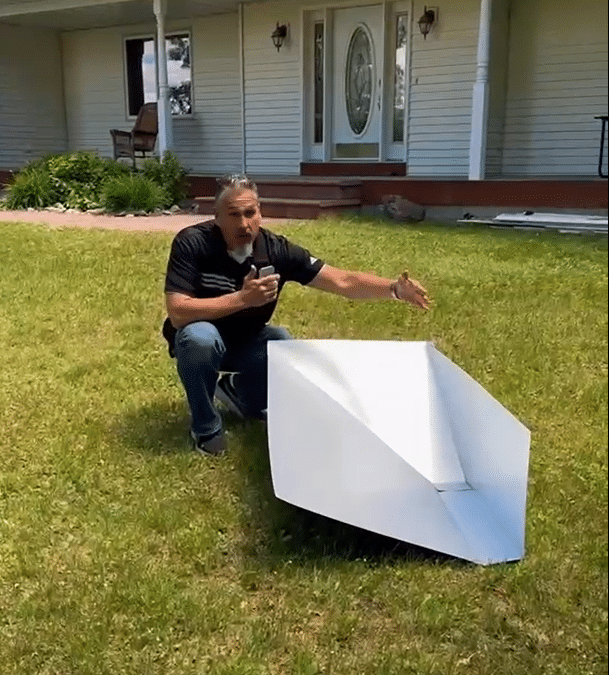
Robert had a custom piece of metal bent so that it could extend well up both sides of the valley and overlap up the wall.
As Robert explained while showing the piece on the job:
“We had it specially bent. It goes pretty high up the valley, up both sides and up the wall.”
The repair also incorporates new wood, ice and water shield, valley metal and additional metal protection at the roof’s pitch change. The custom fabricated piece then overlaps the critical area to provide another layer of protection where the roof and wall meet.
Why Details Like This Matter
Roof leaks are not always caused by an obvious missing or damaged shingle. Sometimes the real problem is how different parts of a roof come together.
Valleys, walls, chimneys, roof additions and changes in roof pitch can all create areas where water needs to be carefully managed. Simply replacing the visible roofing material without correcting the underlying water path can allow the same problem to return.
That’s why identifying where the water is coming from and why it is getting there is an important part of a roof repair.
Watch the video where Robert explains how water had been entering the wall and the reason a custom bent metal piece was fabricated for the repair.
Have a Difficult Roof Leak or Flashing Problem?
If you’re dealing with a roof leak, water damage or an unusual area where different roof sections meet, the source of the problem may not always be visible from the surface.
Revival Roofing provides roof inspections and repairs throughout the Brainerd Lakes Area and surrounding communities, with a focus on finding the source of roofing problems and determining the appropriate repair.
Contact Revival Roofing to have your roofing problem evaluated at (218) 866-0957.
Frequently Asked Questions
What happens when a roof valley runs into a wall?
A roof valley concentrates water from adjoining roof slopes. When that water is directed toward a wall, the intersection needs properly designed flashing and waterproofing to move water away from vulnerable areas. Problems with that transition can allow moisture to reach the roof deck or wall.
Can damaged roof decking be repaired during a roofing project?
Yes. When deteriorated or rotten decking is uncovered, the damaged material can be removed and replaced before the roofing system is completed. This provides a sound surface for the new roofing materials.
Why would a roofer need custom bent flashing?
Standard flashing does not fit every roof configuration. Roof additions, unusual valleys, pitch changes and roof to wall intersections can require metal fabricated specifically for the dimensions and water flow of that area.