Storm Damage Roofing Services in the Brainerd Lakes Area
Protecting Minnesota Homes After Hail, High Winds & Severe Weather
Minnesota storms can leave behind damage that isn’t always visible from the ground. High winds, hail, heavy rain, fallen branches, and snow can all affect the performance of your roofing system. Whether you’ve noticed missing shingles or simply want peace of mind after severe weather, Revival Roofing provides professional storm damage inspections, honest recommendations, and quality repairs to help protect your home.
✓ Serving Minnesota Since 1991
✓ Locally Owned & Operated
✓ Licensed & Insured
✓ Free Roof Inspections
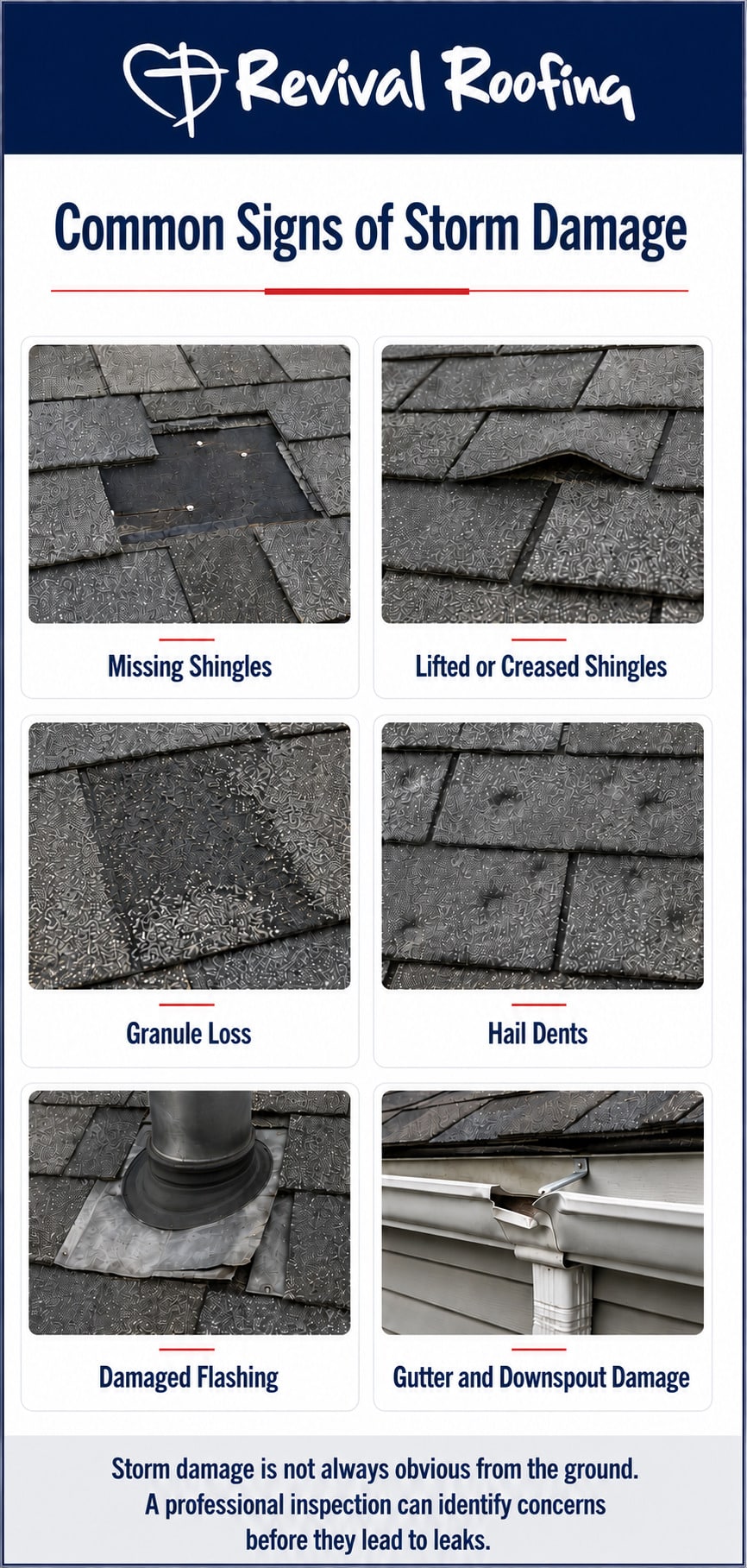
Strong winds, hail, and heavy rain can damage even a newer roof. We help homeowners throughout Baxter, Gull Lake, Hackensack, and surrounding Brainerd communities assess storm damage and determine the best next steps.
Safety Reminder: If your home has experienced severe weather, avoid climbing onto your roof to inspect for damage. Many storm-related issues can be identified safely from the ground or by a trained roofing professional.
Storm Damage Isn’t Always Easy to See
Not all storm damage is immediately visible from the ground. While missing shingles or fallen tree branches are obvious warning signs, many roofing problems develop beneath the surface or become noticeable only after water begins entering the home.
High winds can loosen shingles, hail can damage protective granules, and flying debris may affect flashing, vents, or other critical roofing components. Left unaddressed, even seemingly minor storm damage can allow moisture to penetrate your roofing system and lead to more extensive repairs over time.
A professional inspection provides the opportunity to identify visible storm-related damage, evaluate the overall condition of your roof, and determine whether repairs or additional action may be needed.
Minnesota Weather Creates Unique Roofing Challenges
Homeowners throughout the Brainerd Lakes Area experience a wide range of weather conditions that can affect residential roofing systems throughout the year.
Winter
Heavy snow accumulation, ice dams, freeze-thaw cycles, and falling ice can place additional stress on your roofing system.
Summer
Severe thunderstorms, hail, tornado-strength winds, and fallen branches can damage shingles, flashing, and other roofing components.
Spring
Strong thunderstorms, heavy rainfall, and high winds often reveal damage caused during the winter months.
Fall
Cooler temperatures make it an excellent time to inspect your roof and address any storm damage before winter arrives.
Every season presents unique challenges, making routine inspections and timely repairs an important part of protecting your home.
⚠ Why Prompt Action Matters
Storm damage doesn’t always result in an immediate leak. In many cases, damage remains hidden until repeated rain or melting snow allows moisture to work its way beneath the roofing materials.
Addressing concerns early can often help prevent more extensive damage to your roof, attic, insulation, and interior finishes.
💡 Homeowner Tip
After severe weather, perform a visual inspection from the ground using binoculars if needed. Look for missing shingles, fallen branches, exposed flashing, or roofing debris, but avoid climbing onto the roof yourself. If you notice anything unusual—or simply want peace of mind—schedule a professional storm damage inspection.
Common Types of Storm Damage to Your Roof
Not all storm damage looks the same. The type and severity of damage often depend on the weather event, the age of your roof, and the condition of your roofing materials before the storm.
Below are some of the most common types of storm-related roof damage we find throughout the Brainerd Lakes Area.
🌬️ Wind Damage
Strong winds can lift, loosen, or completely remove shingles, leaving the underlying roofing materials exposed to moisture. Wind can also damage ridge caps, flashing, and roof edges, making your home more vulnerable to future leaks.
Common signs include:
- Missing shingles
- Lifted or creased shingles
- Loose ridge caps
- Exposed roofing materials
- Debris scattered around your property
Recommended Service: Roof Inspection • Roof Repair
🧊 Hail Damage
Hail can damage asphalt shingles by dislodging protective granules or creating impact marks that may shorten the life of your roof. While hail damage isn’t always obvious from the ground, it can reduce your roof’s ability to protect your home over time.
Common signs include:
- Granule loss
- Dark impact marks
- Dented roof vents or flashing
- Damaged gutters or downspouts
- Bruised shingles
Recommended Service: Storm Damage Inspection
🌳 Fallen Trees & Branches
Heavy winds and severe storms can cause tree limbs or entire trees to fall onto a roof. Even smaller branches can damage shingles, flashing, gutters, or roof penetrations.
Common signs include:
- Visible impact damage
- Broken shingles
- Damaged flashing
- Bent gutters
- Structural concerns
Recommended Service: Roof Inspection • Roof Repair
🌧️ Heavy Rain & Water Intrusion
Storms that produce prolonged rainfall can expose weaknesses in an aging roofing system. Water may enter through damaged shingles, flashing, or other vulnerable areas and eventually appear inside your home.
Common signs include:
- Ceiling stains
- Damp attic insulation
- Musty odors
- Active leaks
- Peeling paint near ceilings
Recommended Service: Roof Inspection
❄️ Snow & Ice Damage
Minnesota winters bring heavy snow, ice dams, and repeated freeze-thaw cycles that can place additional stress on your roofing system. As snow melts and refreezes, water may back up beneath shingles and find its way into your home.
Common signs include:
- Ice dams
- Icicles along roof edges
- Water stains after snow melt
- Damaged gutters
- Sagging snow loads
Recommended Service: Roof Inspection • Roof Maintenance
Storm Damage Isn’t Always Visible
Some storm-related damage cannot be identified safely from the ground and may not cause immediate leaks. A professional inspection can help determine whether your roof sustained visible damage and whether repairs or additional action may be needed.
💡 Homeowner Tip
Take photos of your property after a significant storm, including any fallen branches, damaged gutters, or visible roofing concerns. These photos can help document the condition of your property and provide a useful point of reference as you monitor for changes over time.
Signs Your Roof May Have Storm Damage
After a severe storm, it’s natural to look for obvious signs of damage. However, many roofing problems aren’t immediately visible from the ground and may not begin causing leaks until weeks or even months later.
If your home has recently experienced hail, strong winds, heavy rain, or fallen tree limbs, watch for these common warning signs.
Signs Your Roof May Have Damage
Not every roofing problem is immediately obvious. While some issues, such as missing shingles after a storm, are easy to spot, others develop gradually over time. Knowing what to watch for can help you schedule an inspection before minor concerns become more expensive repairs.
If you notice any of the following warning signs, it’s a good idea to have your roof professionally inspected.
Missing or Lifted Shingles
High winds can loosen or completely remove shingles, exposing the layers beneath to moisture and additional weather damage. Even a single missing shingle can create an entry point for water if left unaddressed.
Shingle Granules in Gutters or Downspouts
Finding an excessive amount of shingle granules after a storm may indicate that your roof has experienced hail damage or accelerated wear. Granules protect shingles from UV exposure and weathering, so significant loss can reduce their effectiveness.
Dented Metal Components
Inspect visible metal surfaces such as roof vents, flashing, gutters, and downspouts. Dents or impact marks may indicate that hail was strong enough to damage other roofing materials as well.
Water Stains Inside Your Home
Brown stains on ceilings or walls, damp attic insulation, peeling paint, or musty odors can all indicate that water is entering through a damaged roof.
Fallen Branches or Roofing Debris
Branches resting on your roof, broken shingles in your yard, or pieces of flashing found after a storm are all signs that your roof should be professionally inspected.
Sagging or Visible Structural Changes
If any portion of your roof appears uneven or sagging after severe weather, contact a roofing professional as soon as possible. Structural concerns should be evaluated promptly to help prevent additional damage.
Remember: Damage Isn’t Always Visible
Many forms of storm damage can only be identified through a professional inspection. Even if your roof appears undamaged from the ground, it’s possible for wind or hail to weaken roofing materials without creating immediate leaks.
What Should You Do If You Notice These Signs?
If you observe any of these warning signs—or simply want peace of mind after severe weather—schedule a professional storm damage inspection. We’ll evaluate your roof, explain what we find, and recommend the most appropriate next steps based on your roof’s condition.
💡 Homeowner Tip
Take photographs from the ground if you notice visible storm damage, but avoid climbing onto your roof. Wet shingles, hidden damage, and unstable surfaces can make roof inspections dangerous without the proper training and equipment.
What to Do After a Storm
If your home has been affected by severe weather, it’s important to respond carefully. Taking the right steps can help protect your family, minimize additional damage, and provide valuable documentation if repairs are needed.
Here’s what we recommend after a significant storm.
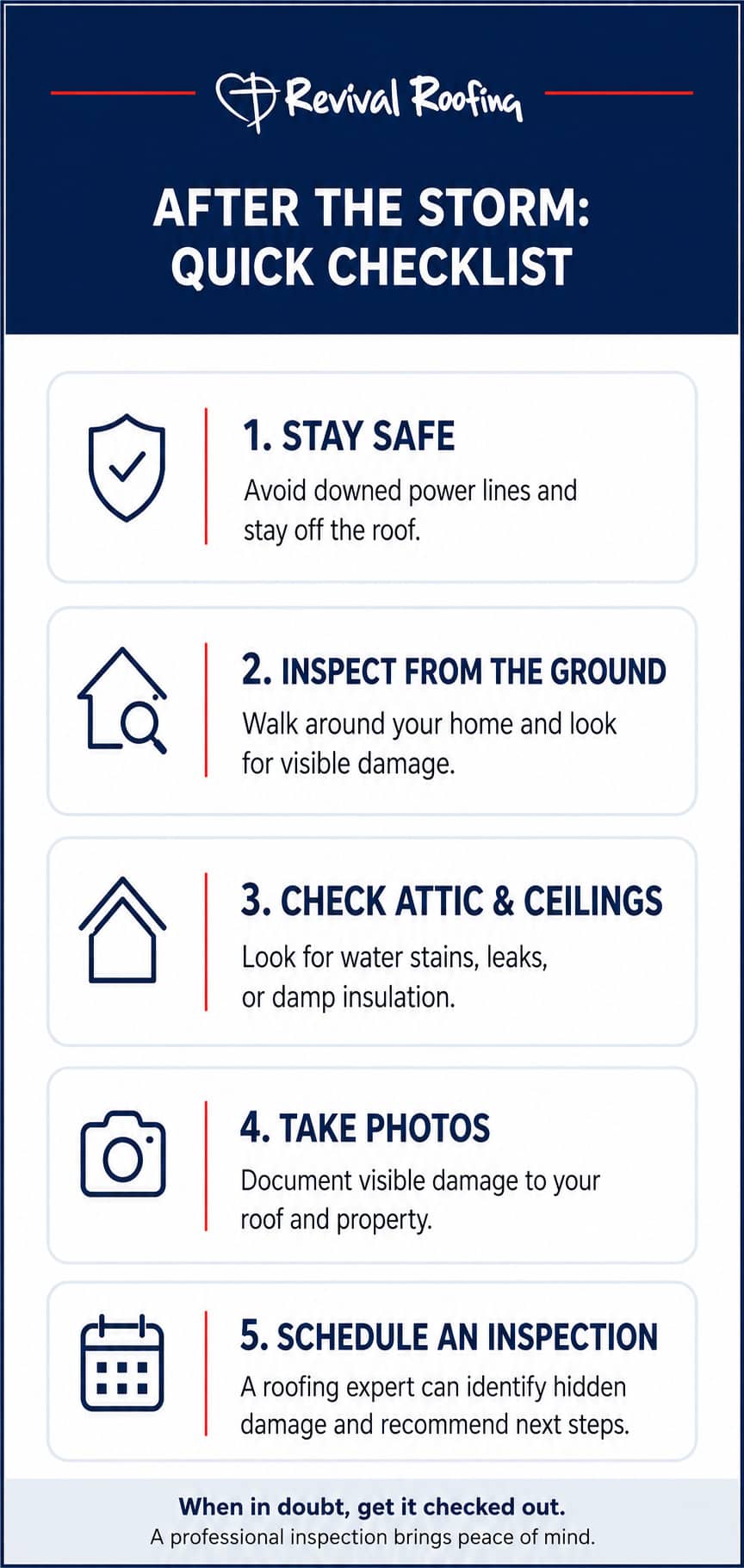
① Put Safety First
If you see downed power lines, structural damage, or large tree limbs on your home, stay clear of the area and contact the appropriate emergency services or utility provider if necessary. Your safety should always come first.
② Perform a Ground-Level Inspection
Walk around your home and look for visible signs of damage from the ground.
Look for:
- Missing or lifted shingles
- Fallen branches
- Damaged gutters or downspouts
- Pieces of roofing material on the ground
- Bent or damaged flashing
- Visible roof sagging
Avoid climbing onto the roof yourself, especially while surfaces may still be wet or unstable.
③ Check Inside Your Home
Storm damage isn’t always visible outside.
Look for:
- Ceiling or wall water stains
- Damp attic insulation
- Active leaks
- Dripping water
- Musty odors
These signs may indicate that water has entered through the roofing system.
④ Document What You See
If you notice visible damage, take clear photos from a safe location.
Helpful photos include:
- Roof damage visible from the ground
- Fallen trees or branches
- Damaged gutters
- Interior water stains
- Any debris around your property
Good documentation can be helpful when discussing repairs or if you decide to file an insurance claim.
⑤ Schedule a Professional Storm Damage Inspection
Some storm damage isn’t visible from the ground and may not cause immediate leaks. A professional inspection can identify visible damage, evaluate your roof’s condition, and help you understand whether repairs or additional action may be needed.
We’ll explain what we find, answer your questions, and provide honest recommendations based on your roof’s condition.
⚠ Avoid Common Mistakes After a Storm
Following severe weather, homeowners are often approached by contractors offering immediate repairs or requesting large upfront payments.
Before moving forward with any roofing work:
- Verify that the contractor is licensed and insured.
- Ask questions about the recommended repairs.
- Take time to understand the proposed scope of work.
- Be cautious of high-pressure sales tactics.
- Get a professional inspection before making major decisions whenever possible.
Choosing a trusted local contractor can help you make informed decisions with confidence.
💡 Homeowner Tip
If a storm has recently passed through your area, even if your roof appears undamaged, scheduling a professional inspection can provide peace of mind and help identify issues that may not be immediately visible.
Our Storm Damage Inspection Process
A storm can leave behind damage that isn’t always obvious from the ground. Our inspection process is designed to give you a clear understanding of your roof’s condition so you can make informed decisions about any repairs that may be needed.
Whether your roof sustained visible damage or you simply want peace of mind after severe weather, we’ll take the time to thoroughly evaluate your roofing system and explain what we find.
① Discuss the Storm and Your Concerns
Every inspection begins with a conversation.
We’ll ask questions about:
- When the storm occurred
- The type of weather your home experienced
- Any leaks or interior water stains you’ve noticed
- Visible damage you’ve observed
- Any previous roofing concerns
This helps us focus on the areas that may require closer attention.
② Perform a Comprehensive Roof Inspection
We carefully inspect the accessible components of your roofing system for visible signs of storm-related damage.
Our inspection may include evaluating:
- Asphalt shingles
- Ridge caps
- Flashing
- Roof vents
- Chimney areas
- Gutters and downspouts
- Roof penetrations
- Signs of wind or hail damage
- General roof condition
③ Document Our Findings
If we identify visible storm-related damage or areas of concern, we’ll explain what we found and answer your questions.
When appropriate, we may also provide photographs to help you better understand the condition of your roof.
Our goal is to give you clear information—not pressure you into unnecessary work.
④ Review Your Options
Every roof is different.
Depending on our findings, we may recommend:
- Continued monitoring
- Minor roof repairs
- More extensive repairs
- Roof replacement, if damage is significant or your roof has reached the end of its service life
We’ll explain the reasoning behind our recommendations so you can make the decision that’s right for your home.
⑤ Help You Move Forward
If repairs or replacement are needed, we’ll explain the next steps, answer your questions, and provide a detailed estimate.
If your roof appears to be in good condition, we’ll let you know that too. Our goal is to provide honest recommendations based on what we observe during the inspection.
What You Can Expect From Revival Roofing
When you schedule a storm damage inspection with Revival Roofing, you can expect:
✔ Honest, straightforward communication
✔ Thorough inspections
✔ Clear explanations without technical jargon
✔ Recommendations based on your roof’s condition
✔ Respect for your property
✔ No high-pressure sales tactics
✔ A local team serving Minnesota homeowners since 1991
What We Don’t Do
We believe homeowners deserve honest information and time to make informed decisions.
That’s why we don’t:
✘ Recommend repairs that aren’t needed
✘ Use high-pressure sales tactics
✘ Rush you into making a decision
✘ Leave you wondering what comes next
Instead, we’ll explain our findings, answer your questions, and help you understand your options so you can choose the solution that best fits your home.
💡 Homeowner Tip
Even if your roof doesn’t require immediate repairs, keeping a record of professional inspections after significant storms can provide a useful maintenance history for your home and help you monitor changes over time.
Repair or Replace After Storm Damage?
Not every storm-damaged roof needs to be replaced. In many cases, timely repairs can restore your roof’s ability to protect your home. Other times, a replacement may be the better long-term solution, particularly if the damage is extensive or the roof is already nearing the end of its expected lifespan.
During your inspection, we’ll evaluate the condition of your roof and explain your options so you can make an informed decision.
When hail or wind damage affects large areas of the roofing system, a complete roof replacement may provide better long term protection than repairing individual damaged areas.
Roof Repair
____________
When Roof Repair May Be the Right Solution
Repairs are often appropriate when the damage is limited and the overall roofing system remains in good condition.
A repair may be recommended if:
- Damage is confined to a small area.
- Only a few shingles are missing or damaged.
- Flashing or roof vents need attention.
- Your roof is relatively new.
- The remaining roofing materials are in good condition.
Addressing minor damage promptly can help prevent more extensive problems and extend the life of your roof.
Roof Replacement
__________________
When Roof Replacement May Be the Better Option
A replacement may provide greater long-term value when storm damage is widespread or your roof has reached the end of its service life.
Replacement may be recommended if:
- Damage affects multiple roof sections.
- Hail or wind has caused significant deterioration.
- Multiple repairs have already been completed over the years.
- Your roof is nearing the end of its expected lifespan.
- Repair costs approach the value of a replacement.
We’ll explain the factors we considered and answer any questions you have before you make a decision.
Not sure which option is right for your roof?
Every storm—and every roof—is different. A professional inspection provides the information you need to make a confident decision based on your roof’s actual condition.
We’ll Help You Understand Your Options
If repairs are appropriate, we’ll explain what needs attention and why.
If replacement appears to be the better long-term investment, we’ll walk you through the reasons, discuss your options, and provide a detailed estimate.
Our goal is to help you choose the solution that best protects your home—not simply recommend the largest project.
Storm Damage Repair vs. Replacement
| Roof Repair May Be Best When… | Roof Replacement May Be Best When… |
|---|---|
| Damage is limited to one area | Damage is widespread across the roof |
| Your roof is relatively new | Your roof is nearing the end of its lifespan |
| Most shingles remain in good condition | Multiple roofing components are damaged |
| Repairs can restore performance | Repairs may only provide a short-term solution |
| The overall roof structure is sound | Long-term protection is the primary goal |
💡 Homeowner Tip
If your roof has experienced multiple severe storms over the years, a professional inspection can help determine whether additional repairs are still practical or if investing in a replacement may provide better long-term value.
Working With Insurance Companies After Storm Damage
If your roof has sustained significant storm damage, you may wonder whether your homeowner’s insurance policy covers repairs or replacement. The answer depends on several factors, including the cause and extent of the damage, your policy coverage, and your insurance provider’s claim process.
Because every situation is different, it’s important to understand your roof’s condition before deciding whether to file a claim.
Start With a Professional Roof Inspection
Before contacting your insurance company, it’s often helpful to have a professional inspection performed to identify any visible storm-related damage and assess the overall condition of your roof.
An inspection can help you:
- Better understand the condition of your roof.
- Learn whether visible storm damage is present.
- Determine whether repairs may be sufficient.
- Decide whether it makes sense to contact your insurance provider.
We’ll explain what we observe during the inspection so you have the information needed to make an informed decision.
If You Choose to File an Insurance Claim
If you decide to contact your insurance company, they will explain the next steps in their claims process.
This typically involves:
- Reporting the damage to your insurance provider.
- Scheduling an inspection with an insurance adjuster.
- Reviewing the adjuster’s findings.
- Determining whether the damage is covered under your policy.
- Discussing repair or replacement options if the claim is approved.
Every insurance policy is different, so your provider is the best source for questions about coverage, deductibles, or claim eligibility.
What Your Free Roof Inspection Includes
✓ A thorough visual inspection of your roofing system
✓ Evaluation of shingles, flashing, vents, and roof penetrations
✓ Assessment of gutters and drainage as they relate to your roof
✓ Photos of any areas of concern
✓ Honest recommendations based on your roof’s condition
✓ A clear explanation of whether repair, maintenance, or replacement is the best option
✓ A no obligation estimate if work is recommended
Honest Guidance Every Step of the Way
Not every storm results in significant roof damage, and not every damaged roof requires replacement.
If we determine that your roof is in good condition or that only minor repairs are needed, we’ll tell you. If more extensive work appears necessary, we’ll explain why and answer your questions before any work begins.
We believe honest recommendations lead to better decisions and long-term relationships with our customers.
We’re Here to Help You Make an Informed Decision
Storm damage can be stressful, especially when you’re unsure what your roof needs. Our goal is to provide a thorough inspection, explain what we find, and help you understand your options, so you can move forward with confidence.
Our free inspection is designed to help homeowners understand the condition of their roof and make informed decisions. It does not include engineering reports, certified inspections for real estate transactions, or insurance claim determinations.
💡 Homeowner Tip
Keep a folder with photos of your roof, inspection reports, repair records, and any storm-related documentation. Having this information organized can make future maintenance decisions and insurance conversations easier.
Why Homeowners Choose Revival Roofing for Storm Damage Roofing
When a storm damages your roof, you want more than just a roofing contractor—you want a local team that will take the time to inspect your roof carefully, explain your options clearly, and help you make informed decisions.
Since 1991, Revival Roofing has been helping homeowners throughout the Brainerd Lakes Area protect their homes with honest recommendations, quality workmanship, and dependable service. Whether your roof needs a minor repair or a complete replacement, our focus is on providing the right solution for your home—not the biggest project.
Local Experience Matters
Storms affect Minnesota roofs in unique ways. From spring hailstorms and summer wind events to heavy snow and ice during the winter, our region presents year-round challenges that require experience and attention to detail.
As a locally owned and operated roofing contractor, we understand the weather conditions homeowners face throughout the Brainerd Lakes Area and tailor our recommendations to your roof’s specific needs.
Honest Recommendations
Every roof is different, and so is every inspection.
If your roof only needs a repair, we’ll tell you.
If it doesn’t require any work at this time, we’ll tell you that too.
If replacement is the better long-term solution, we’ll explain why and answer your questions before moving forward.
Our goal is to help you make confident, informed decisions—not pressure you into unnecessary work.
Quality Materials & Professional Workmanship
A durable roof depends on more than quality shingles. Every roofing system includes components that work together to help protect your home from the elements.
We focus on quality installation practices and dependable materials designed to perform in Minnesota’s changing weather conditions.
Clear Communication From Start to Finish
We believe homeowners should always understand what’s happening with their roofing project.
We’ll explain:
- What we found during the inspection
- Why we’re making a recommendation
- What your options are
- What to expect during the project
- The next steps moving forward
No confusing jargon. No unnecessary pressure. Just honest communication throughout the process.
Respect for Your Home
We understand that roofing work can be disruptive.
That’s why we treat every property with care by working efficiently, maintaining a clean job site, and respecting your landscaping and outdoor spaces whenever possible.
Our goal is to leave you with a quality roof—and a positive experience.
Why Revival Roofing at a Glance?
Since 1991
Serving homeowners throughout the Brainerd Lakes Area with trusted residential roofing services.
Locally Owned & Operated
We understand the weather challenges Minnesota homeowners experience every season.
Licensed & Insured
You can feel confident knowing your project is handled by a professional roofing contractor.
Honest Recommendations
Our recommendations are based on your roof’s condition—not sales quotas.
Quality Workmanship
Professional installation practices and attention to detail on every project.
Free Storm Damage Inspections
Helping homeowners understand the condition of their roof after severe weather.
💡 Homeowner Tip
The best roofing experience starts with choosing a contractor you trust. Look for a company that communicates clearly, explains your options, and takes the time to answer your questions before any work begins.
View our Customer Testimonials




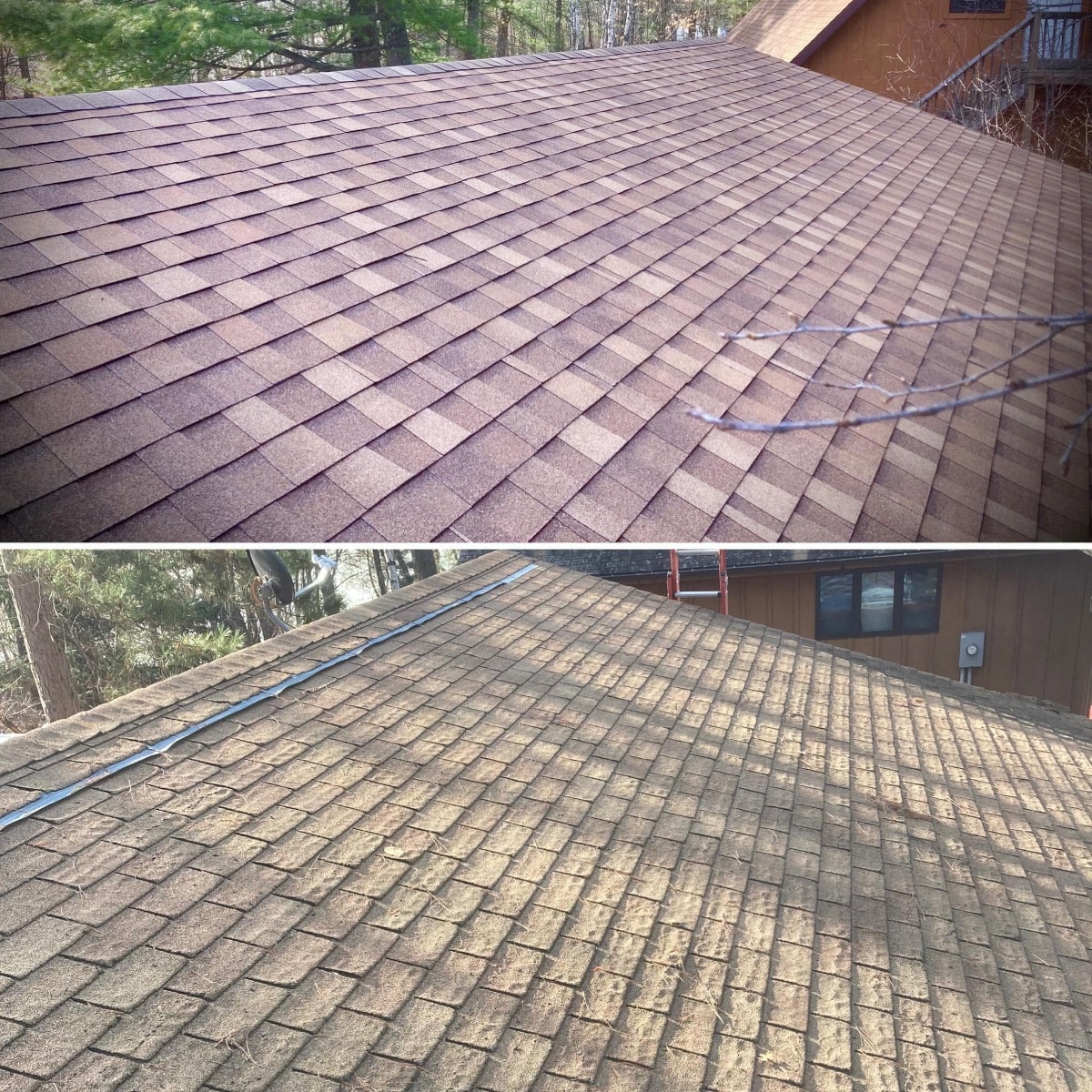
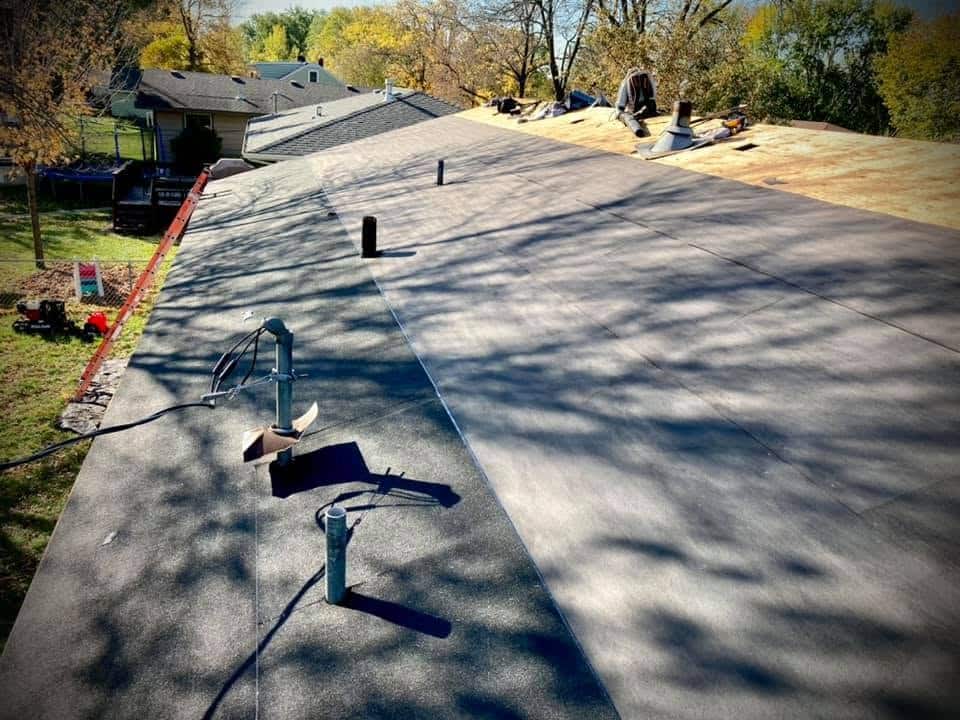
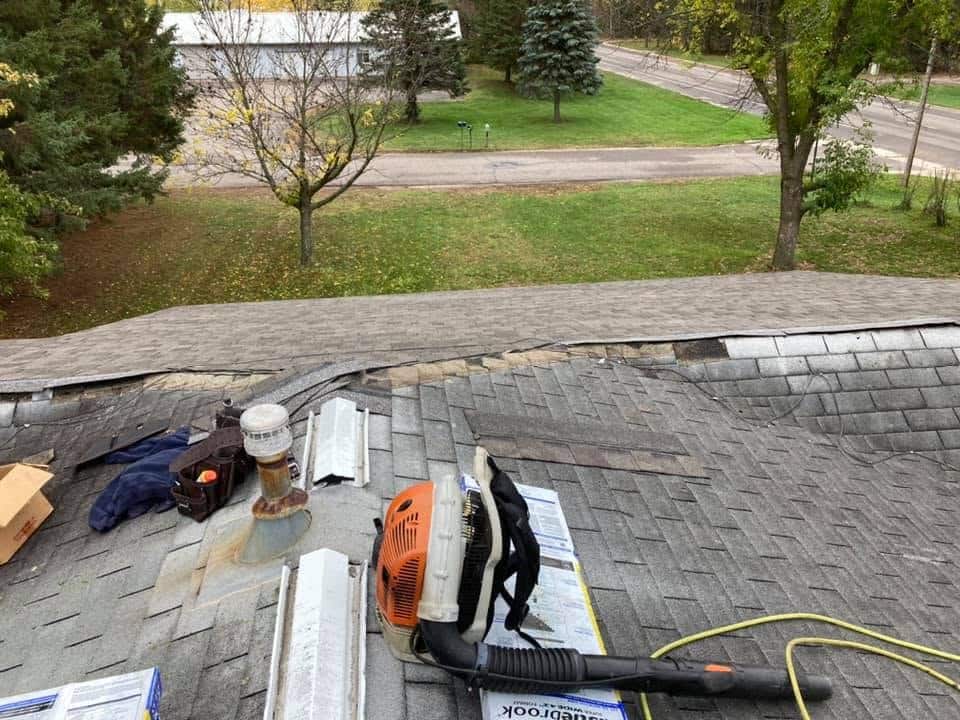
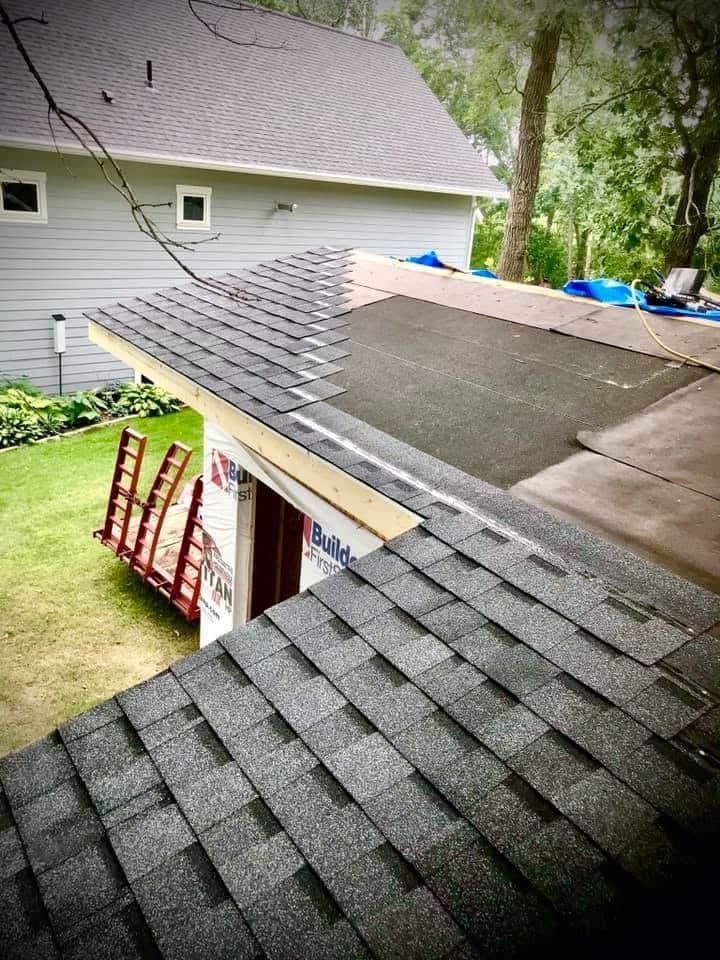
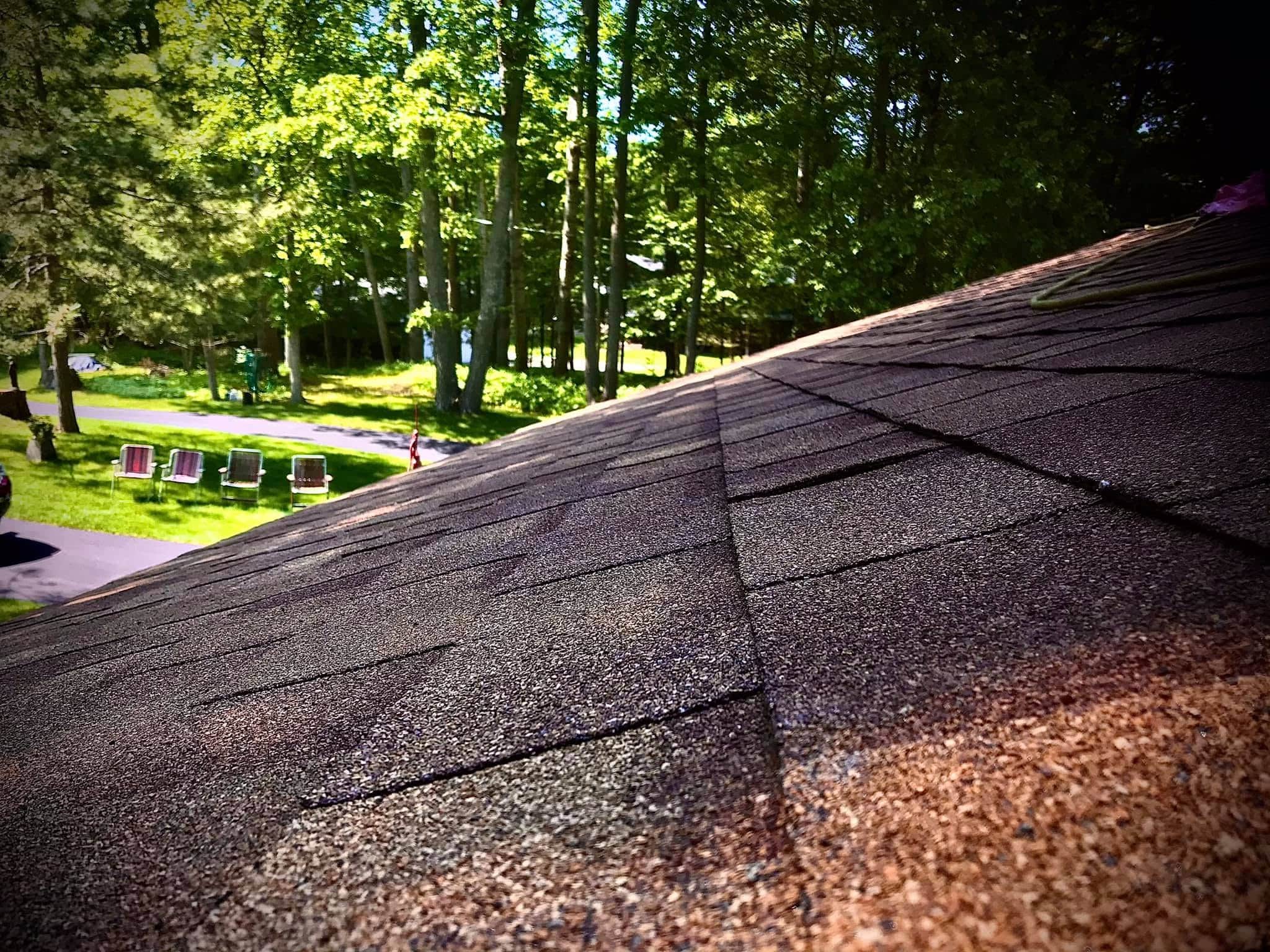
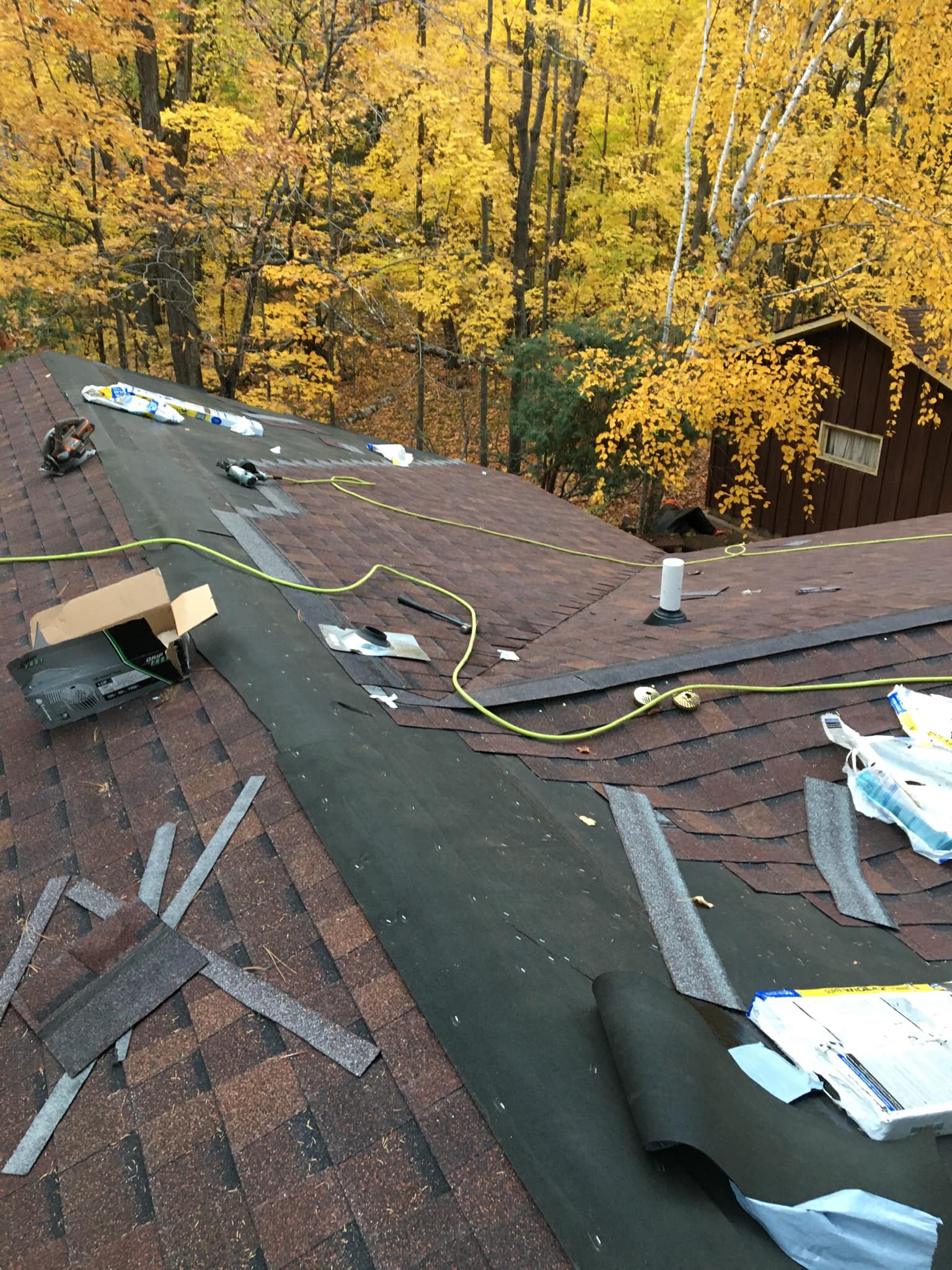
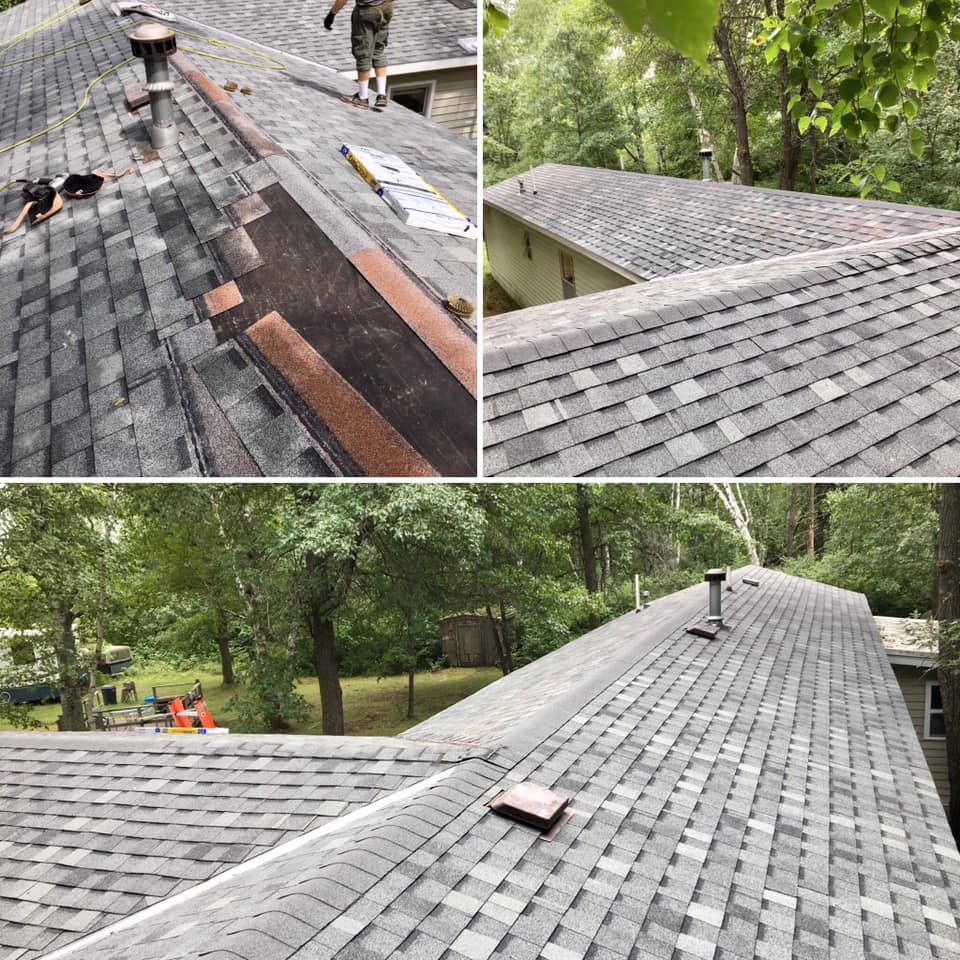
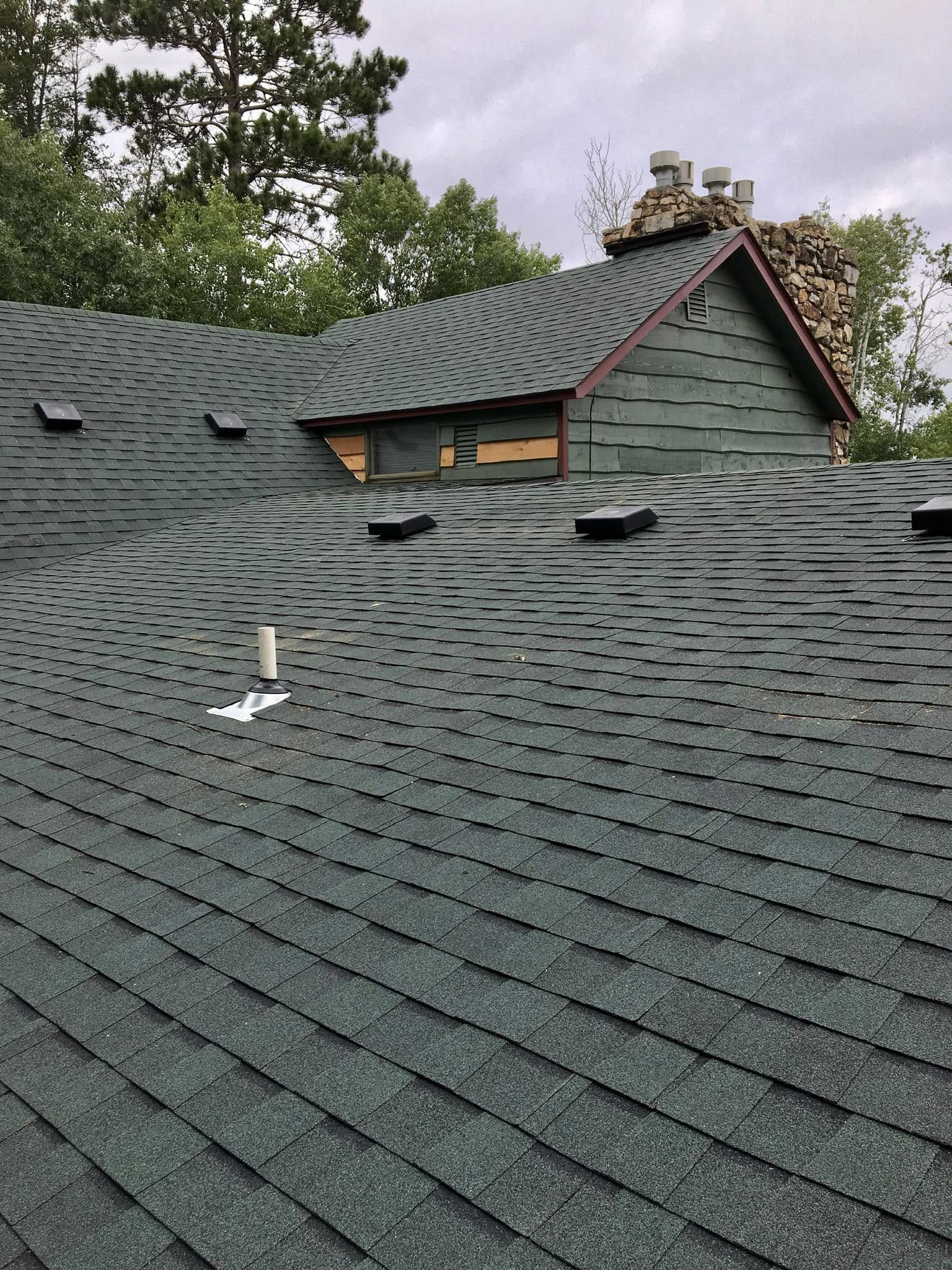
View our Brainerd Lakes Area Asphalt Roofing Work
Frequently Asked Questions
How do I know if my roof has storm damage?
Not all storm damage is easy to spot from the ground. Missing shingles, dented metal components, granule loss, water stains inside your home, or fallen branches on the roof may all indicate damage. Even if you don’t notice obvious problems, a professional inspection can help determine whether your roof sustained visible storm-related damage.
Should I have my roof inspected after a hailstorm?
If your area experienced hail, it’s a good idea to have your roof professionally inspected. Hail can damage shingles, flashing, vents, and other roofing components without creating immediate leaks. An inspection can help identify visible damage and determine whether repairs may be needed.
Can wind damage a roof without removing shingles?
Yes. Strong winds can loosen, lift, or crease shingles without completely tearing them off. Over time, these weakened shingles may become more susceptible to water intrusion and future storm damage.
Does homeowner's insurance cover storm damage?
Insurance coverage depends on your individual policy, the cause of the damage, and your insurance provider’s claim process. If you believe your roof has sustained significant storm damage, a professional inspection can help you better understand your roof’s condition before deciding whether to contact your insurance company.
Should I repair or replace my roof after storm damage?
Every roof is different. Minor storm damage can often be repaired, while widespread damage or an older roof nearing the end of its lifespan may make replacement the better long-term option. A professional inspection helps determine the most appropriate solution.
Is storm damage always visible from the ground?
No. Some forms of storm damage are difficult to identify without a closer inspection. Wind, hail, or flashing damage may not be obvious until water begins entering the home weeks or months later.
How soon should I schedule an inspection after a storm?
It’s generally best to schedule an inspection as soon as practical after severe weather, especially if you notice missing shingles, leaks, fallen branches, or other visible damage. Early inspections can help identify problems before they become more extensive.
What should I do immediately after a storm?
Start by making sure everyone is safe. Perform a visual inspection from the ground, check your attic and ceilings for signs of water intrusion, take photos of any visible damage, and schedule a professional roof inspection if you have concerns. Avoid climbing onto the roof yourself.
Do you offer free storm damage inspections?
Yes. Revival Roofing offers free storm damage inspections throughout the Brainerd Lakes Area. We’ll evaluate the condition of your roof, explain our findings, and provide honest recommendations based on what we observe.
What areas do you serve for storm damage roofing?
Revival Roofing serves homeowners throughout the Brainerd Lakes Area, including Brainerd, Baxter, Nisswa, Pequot Lakes, Crosslake, Breezy Point, Lakeshore, and many surrounding Minnesota communities.
Related Resources
Not Sure Whether Your Roof Was Damaged?
After a severe storm, it’s not always obvious whether your roof needs attention. Some damage is easy to spot, while other issues may not become noticeable until weeks or months later.
If you have concerns about your roof—or simply want peace of mind after hail, high winds, or severe weather—Revival Roofing is here to help.
Our professional storm damage inspections are designed to give you a clear understanding of your roof’s condition, answer your questions, and provide honest recommendations based on what we find.
Whether your roof needs a simple repair, a complete replacement, or no work at all, you’ll receive straightforward information so you can make the decision that’s right for your home.
Schedule Your Free Storm Damage Inspection
If your home has recently experienced severe weather in the Brainerd Lakes Area, don’t wait for a small problem to become a larger one.
Contact Revival Roofing today to schedule your free storm damage roof inspection and gain confidence in the condition of your roof.
Protecting your home starts with understanding the condition of your roof. We’re here to provide the information, guidance, and quality workmanship you need to move forward with confidence.

(218) 866-0957
Pine River, MN
Hours: Mon-Sat 8am - 8pm
Serving the Brainerd Lakes Area
Brainerd • Baxter • Pine River • Nisswa
Crosslake • Pequot Lakes • Hackensack
Contact / Request an appt
2026 © Revival Roofing | All Rights Reserved | Privacy Policy
Licensed & Insured — MN License #RR806717