
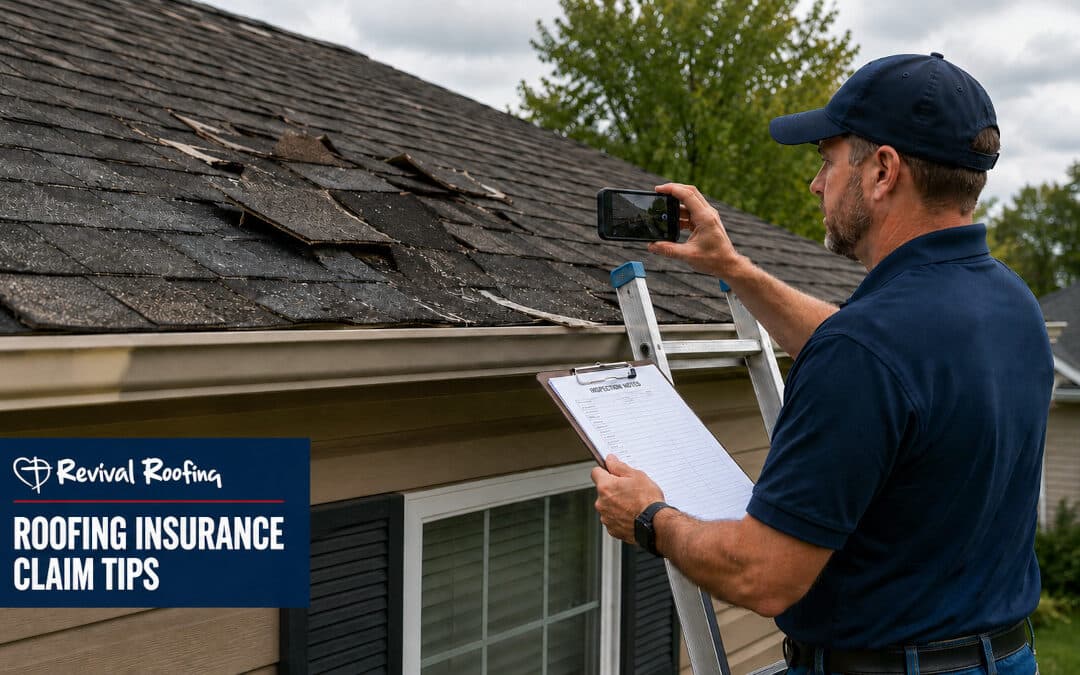
The steps you take after a storm can affect how smoothly your claim moves forward. While every situation is different, there are a few common mistakes homeowners should try to avoid.
Waiting Too Long to Inspect the Roof
Not all storm damage causes an immediate leak. Wind may loosen shingles or damage flashing without creating visible signs inside the home right away.
The longer damage goes unnoticed, the harder it can be to determine whether it was caused by a recent storm or developed over time. Scheduling a professional inspection soon after severe weather can help identify problems before they become more extensive.
Throwing Away Damaged Materials
If shingles or roofing components have blown into your yard, don’t immediately throw them away if it’s safe to keep them. These materials may help document the type and extent of the damage.
Take photographs first, then follow any guidance provided by your insurance company or roofing contractor.
Making Permanent Repairs Too Soon
Emergency repairs that prevent additional water damage are often necessary, but avoid making permanent repairs before the damage has been documented whenever possible.
Your insurance company may need to inspect the roof before approving certain repairs.
Assuming Everything Will Be Covered
Every homeowner’s insurance policy is different.
Coverage depends on factors such as the cause of the damage, your policy language, deductible, exclusions, and the condition of the roof before the storm.
Reviewing your policy and asking questions before making assumptions can help prevent misunderstandings later in the process.
Working With the Insurance Adjuster
Once a claim has been filed, your insurance company may schedule an inspection with an adjuster.
The adjuster’s role is to evaluate the reported damage based on your policy. During this visit, having documentation already prepared can make the inspection more efficient.
Many homeowners also choose to have their roofing contractor available during the inspection. A contractor can answer questions about the roofing system, identify storm-related damage that may not be obvious from the ground, and help ensure the roof is evaluated thoroughly.
The goal isn’t to argue with the adjuster. It’s to make sure everyone is working with the same information.
What This Means for Brainerd Lakes Homeowners
Homes throughout the Brainerd Lakes Area experience a wide range of weather throughout the year. Summer storms can bring hail and damaging winds, while winter conditions may expose weaknesses that were created months earlier.
Cabins, seasonal homes, and lake properties can present additional challenges because damage isn’t always discovered immediately. A roof that appears fine from the driveway could have missing shingles or damaged flashing that allows water to enter over time.
If your neighborhood recently experienced strong winds or hail, it’s worth scheduling a professional roof inspection, even if you haven’t noticed a leak. Catching storm damage early may help prevent more extensive repairs later.
How a Professional Roofing Contractor Can Help
Filing an insurance claim doesn’t automatically mean your roof needs to be replaced.
Sometimes a roof repair is all that’s needed. Other situations involve more widespread damage that makes a roof replacement the more practical long-term solution.
A thorough inspection helps determine which approach makes the most sense for your home.
An experienced roofing contractor can also:
- Document visible storm damage.
- Explain what was found in clear, understandable language.
- Answer questions about asphalt shingle performance.
- Help homeowners understand the repair process.
- Complete approved repairs using quality materials and installation practices.
Revival Roofing focuses on residential asphalt roofing systems designed to perform well through Minnesota’s changing seasons. Recommendations are based on the condition of the roof rather than assuming every storm requires a replacement.
You can also learn more about the roofing services Revival Roofing provides throughout central Minnesota.
Conclusion
Storm damage is stressful enough without trying to figure out an insurance claim on your own.
Understanding what your policy may cover, documenting damage carefully, and having the roof professionally inspected can make the process much more manageable.
Not every storm leads to a major repair, and not every damaged roof needs to be replaced. The most important step is understanding the condition of your roof so you can make informed decisions based on accurate information.
If your home has recently experienced hail, strong winds, or other severe weather, a professional inspection can help identify damage, answer your questions, and provide the documentation you need to determine the next steps.
Frequently Asked Questions
Should I contact my insurance company or a roofing contractor first?
If your home has experienced hail, strong winds, or another severe weather event, it’s often helpful to have a professional roof inspection before filing a claim. An inspection can identify whether storm damage is actually present and document the condition of your roof. This information allows you to speak with your insurance company based on documented findings rather than assumptions. If emergency repairs are needed to prevent additional water damage, those should be addressed as soon as it’s safe to do so.
Will my homeowner's insurance pay for a new roof?
It depends on the cause of the damage and the terms of your policy. Insurance commonly covers sudden events such as hail, wind, or falling trees when the damage is covered under your policy. It generally does not cover normal aging, deferred maintenance, or wear that occurs over many years. Reviewing your policy and having your roof professionally inspected can help determine whether filing a claim is appropriate.
How long do I have to file a roofing insurance claim after a storm?
The time allowed varies by insurance company and policy. Even if your policy provides a generous filing window, it’s wise to document the damage and schedule an inspection as soon as possible. Prompt action helps preserve evidence, prevents additional damage, and makes it easier to connect the damage to a specific weather event.
What if my roof isn't leaking after a storm?
A roof doesn’t have to leak immediately to have storm damage. Wind can loosen shingles, hail can reduce the protective surface of asphalt shingles, and flashing may become damaged without allowing water into the home right away. A professional inspection can identify hidden damage before it develops into a more expensive repair.
Can my roofing contractor meet with the insurance adjuster?
Yes. Many homeowners choose to have their roofing contractor present during the insurance inspection. The contractor can answer questions about the roofing system, point out documented storm damage, and help ensure all visible damage is evaluated. The goal is to provide accurate information so everyone has a clear understanding of the roof’s condition.